Guides · EV Chargers · Updated · 7 min read
EV charger grant UK 2026: who can actually claim it
The EV charger grant UK rules in plain words: 75% off a home chargepoint up to £500 for renters, flat owners and landlords, nothing for house owners.
EV chargersHome EV charger installation

Joe Sales, who runs Newpower Advanced Ltd
Director, Newpower Advanced Ltd · MCS NAP-75287 · Reviewed by Joe Sales
Want the number for your roof?
We come and look, then give you a figure. We will come straight back to you to arrange a time.
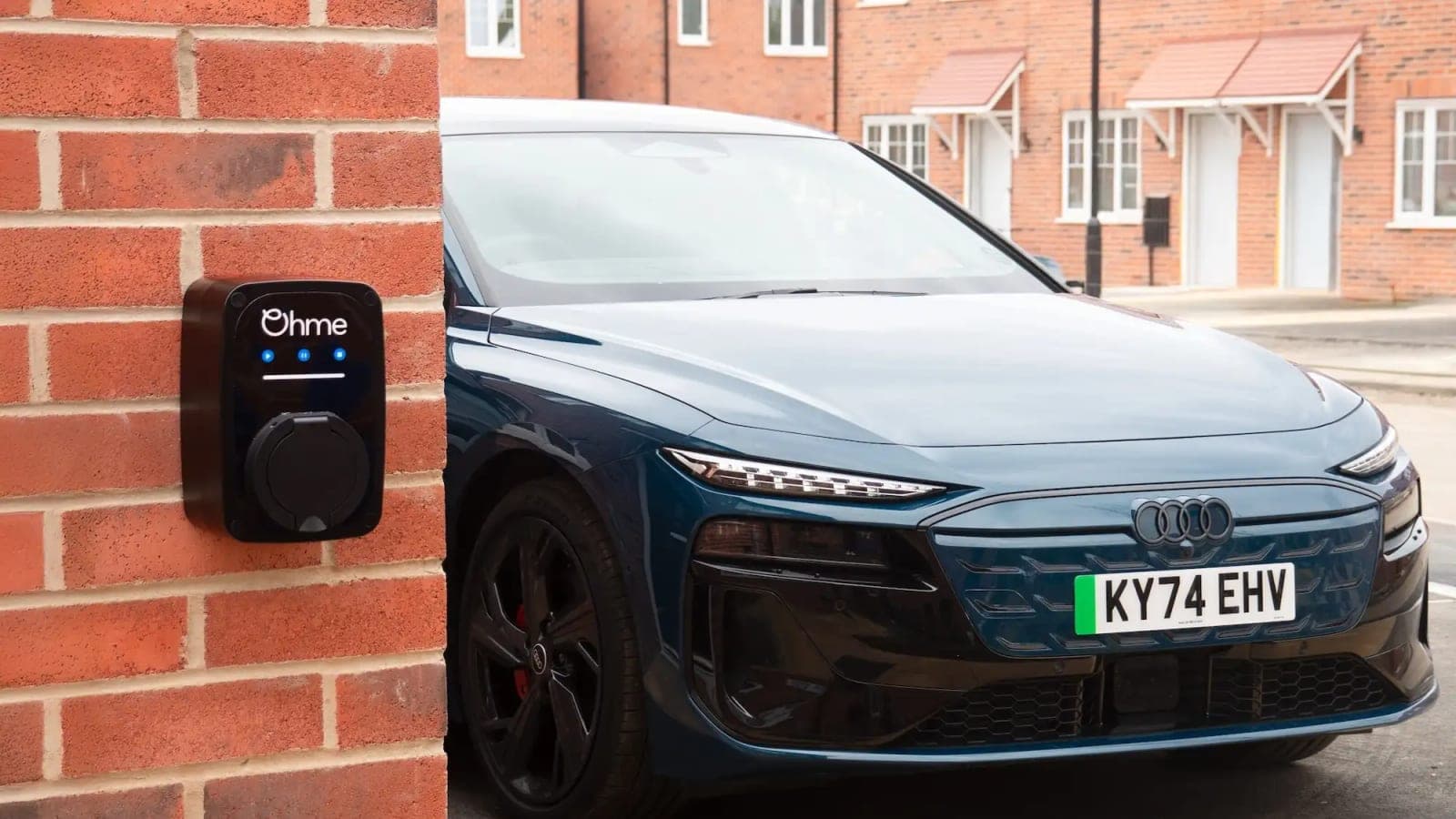
The EV charger grant UK drivers ask us about is real, and most people who ask are not eligible for it. It pays 75% of the cost of buying and fitting a home chargepoint, capped at £500. You can claim it if you rent your home, if you own a flat, or if you are a landlord. If you own a house with a driveway, there is nothing for you, and there has not been since 2022. The chargers we fit and what an install involves are on the EV chargers page.
Here is the rule in full, including the bit about the parking space that catches people out.
Who gets it, briefly
- The grant pays 75% of the cost of buying and fitting a chargepoint, up to £500 (gov.uk).
- You qualify if you rent a home, or own a flat. Shared ownership flats count.
- You do not qualify if you own a house, unless it has been split into flats and you live in one of them.
- The parking space must be off-street, private, clearly defined, and yours to use at any time.
- You need a vehicle on the OZEV approved list. Owned, leased for six months or more, or on order all count.
- The installer makes the claim and takes it off your bill. You never handle the money.
- Current funding for the scheme runs to 31 March 2027 (facts.ts, EV_GRANT).
- EV chargers carry 20% VAT. They are not in the zero-rated group with solar, batteries and heat pumps.
Who gets the EV charger grant UK pays out?
Three groups, and the wording on gov.uk is tight.
The first is anyone who rents a residential property. It does not matter whether the landlord is a council, a housing association or a private owner. What matters is that you live there and you have a parking space you are allowed to use.
The second is anyone who owns a flat, including a flat bought through shared ownership. A converted house counts here as well. If the building has been split into flats and you own one of them and live in it, you are in.
The third is landlords, who apply through a different route and can claim for several properties.
Everyone in those groups also needs an eligible vehicle. That means a car or van on the OZEV approved list, which you own, or lease for at least six months, or use as a work vehicle for at least six months, or have on order. A plug-in hybrid on the list counts.
Why house owners with a driveway get nothing
Because the old scheme did its job and was closed.
The Electric Vehicle Homecharge Scheme used to pay owner-occupiers of houses. It ended for that group on 31 March 2022. Government took the view that the market for driveway charging was established and the money was better aimed at people who could not easily fit a charger themselves.
So if you own a semi with a drive, the honest answer is that no grant applies to you. Anyone telling you otherwise is either working from an old page or hoping you will not check. We would rather say it on the phone than after a survey.
There are two exceptions worth checking, and the second one catches a lot of people out.
If your house was converted into flats and you own and live in one of those flats, you are treated as a flat owner and you can claim.
And if your house has no driveway at all, so you park on the street, there is now a grant specifically for you. That one did not exist when most of the advice online was written.
The grant for houses with no driveway
This is the one people miss, and on a terraced street it is the one that matters.
If you own or rent a house whose only parking is on the road outside, you can claim 75% of the cost of the charger and the installation, up to £500, the same as a flat owner. The condition is that the cable has to cross the pavement properly, in a gully or a channel set into the footpath, rather than running over the flags on a mat or under a rubber ramp.
That is a real piece of work and it needs the council's agreement, because the footpath belongs to them. Some councils have a scheme set up for it and some do not, so the sequence is: check the council first, then apply for the grant, then book the install. We will tell you where your council stands before you spend anything.
The reason the rule exists is safety and liability. A cable lying across a public footpath is a trip hazard that belongs to you, and a gully is not.
What the grant is actually worth
75% of the total, capped at £500, on the hardware and the labour together.
Two things follow from that. The cap bites on almost every real job, so in practice the figure is £500 rather than a percentage. And because the grant applies to the whole cost, a longer or more awkward cable run does not increase what you get back. It increases what you pay.
One grant is allowed per eligible vehicle, and up to two per household where there are two eligible vehicles. Landlords have their own, larger allowance.
What counts as an eligible parking space
This is where applications fail, and it has nothing to do with the charger.
The space has to be off-street. It has to be private, which rules out a shared bay that anyone in the block can park in. It has to be clearly defined, so a numbered bay or a marked space attached to your flat, not a stretch of tarmac where people park where they like. And you need the right to use it at any time, which usually means it is in your lease or your tenancy.
Running a cable across a pavement is not allowed, whatever the grant position. That is a highways matter, and the council will take a dim view.
The installer also has to be satisfied the space is safe to charge in. That is a judgement about the supply, the earthing arrangement and where the cable will sit, and it is part of the survey.
How the landlord route works
Landlords apply under a separate scheme with its own form, and the allowance runs to a number of chargepoints per financial year rather than one per home.
Two points we make to every landlord who rings. First, the tenant does not have to own an electric car for you to claim, which is the opposite of the residential rule. Second, a chargepoint fitted now sits alongside the EPC changes coming for rented homes, so it is worth deciding where the supply goes before any other electrical work is done. Our take on that is in solar panels in Sheffield, which covers rented stock in the city.
What to do if you are not eligible
Spend the money on the right charger and the right tariff instead, because that is where the saving is.
An off-peak EV tariff at a few pence a unit overnight will save far more over a year than £500 off the install ever would. That needs a charger the tariff can talk to. The Ohme Home Pro reads the tariff and schedules itself. The myenergi Zappi does the same and will also soak up spare solar rather than exporting it. Both are on our smart energy tariffs page with what each one pairs with.
If you already have solar, a charger that follows the array is worth more to you than any grant. Charging on your own generation costs nothing.
Checking whether you qualify
Check two things before you ring anybody: whether you own or rent, and whether your parking space is private and clearly yours. Those two answers decide the grant, and nothing else does.
Tethered or untethered covers the next decision, which is the cable. When you are ready for a figure on your own house, Get a quote with your postcode, or ring 01709 278248 and ask for the EV team.
Want the number for your roof?
We come and look, then give you a figure. We will come straight back to you to arrange a time.
About Joe Sales
Joe Sales runs Newpower Advanced Ltd from Rotherham and reads and signs off every guide on this site. More about Joe Sales · Meet the team · More ev chargers guides
Our guides are written by the people who do the installs and checked against our own job records. How we write