

Solar panels, batteries and heat pumps in Lincoln
MCS-certified solar, batteries, heat pumps and EV chargers across Lincoln and Lincolnshire, from the Wolds to the coast.
4.7 on Trustpilot

 No obligation
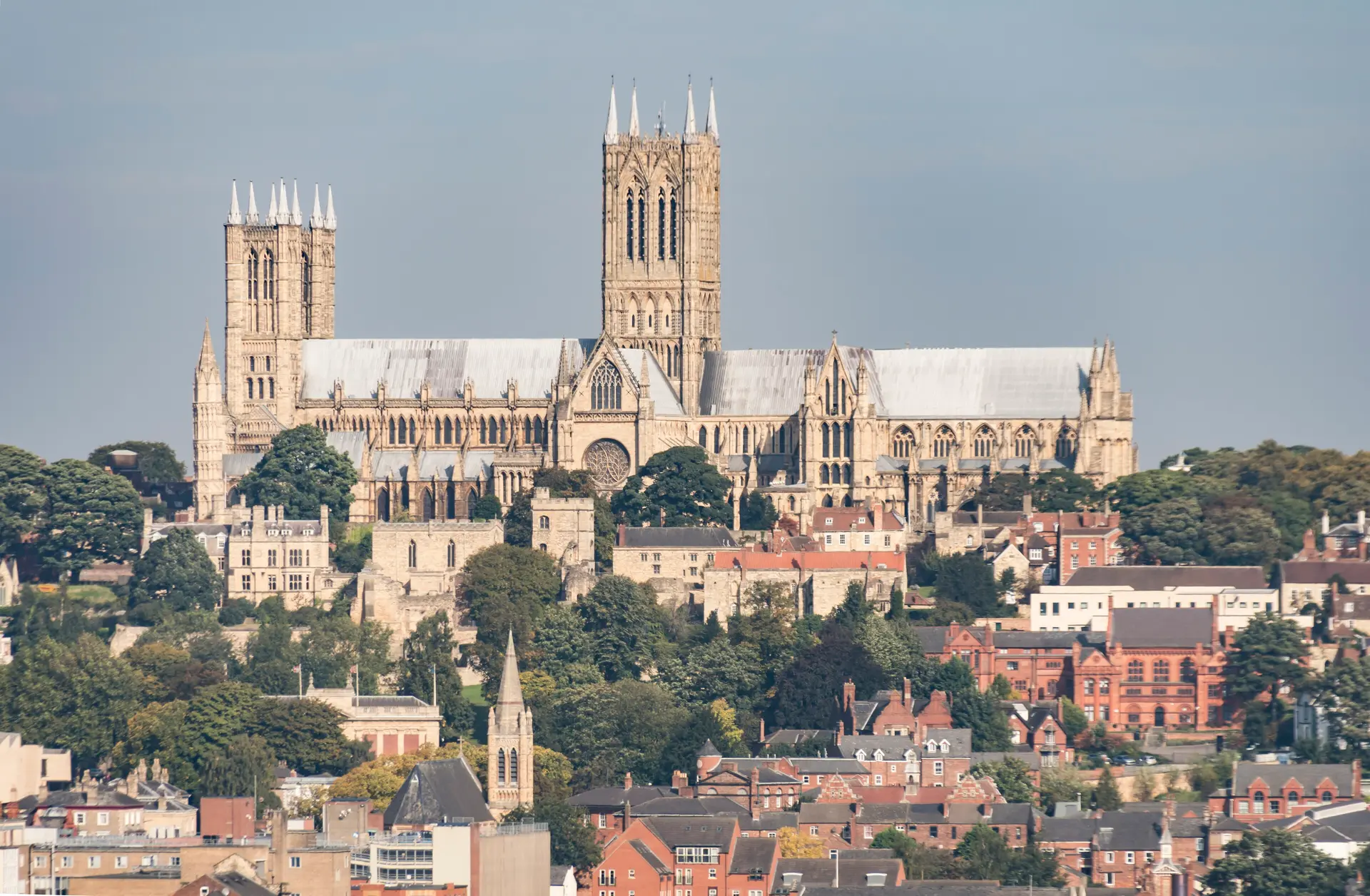
Photo: Jules & Jenny from Lincoln, UK, CC BY 2.0, adapted, via Wikimedia Commons
Solar panel installers for Lincoln.
Lincoln itself is a compact city of semis and terraces, steep and historic uphill around the cathedral and plainer downhill, and almost all of it on mains gas. Step outside the city and Lincolnshire changes quickly: half the houses are detached, and in East Lindsey one home in five still burns oil. So the city conversation is usually solar and a battery, and the county one is often a heat pump. This page gives the figures district by district, and which network operator covers which towns, because the county is split between two.
Every install is MCS certified (NAP-75287), with 0% VAT on solar, batteries and heat pumps until March 2027 and the £7,500 Boiler Upgrade Scheme grant claimed for you.
- Postcode districts
- LN1–LN6 for the city and the villages round it (LN1 the centre, Bailgate and the West End out to Saxilby, LN2 the north-east from Nettleham Road and the Ermine out to Nettleham and Welton, LN3 east to Cherry Willingham and Fiskerton, LN4 south-east to Branston, Washingborough and Metheringham, LN5 the south from Sincil Bank and Bracebridge to Waddington and Navenby, LN6 the south-west from Boultham, Birchwood and Hartsholme to North Hykeham and Skellingthorpe), plus DN21, LN8, LN9, LN11, LN12, NG34, PE21 and PE25 for the towns across the county
- Network operator (DNO)
- National Grid Electricity Distribution (East Midlands). We make the G98 notification or G99 application for your solar or battery; you do not need to contact them.
Lincoln in numbers.
What the public data says about homes here, and what it means for yours.
1,017 kWh
a year from each kW of panels
A south-facing roof at 35° in central Lincoln, after losses. An east or west roof gives between a fifth and a quarter less, and a battery makes better use of what it does produce by carrying the daytime surplus into the evening.
Source: PVGIS (European Commission Joint Research Centre), central Lincoln
1 in 5
East Lindsey homes heated by oil alone
19% of households, with nearly 4% more on tank or bottled gas, against 0.1% in the city and 3% across England. Louth, Horncastle and the Wolds villages are where a heat pump replaces the dearest heat, with the higher £9,000 grant for homes coming off oil or LPG.
Source: Census 2021, TS046 central heating (ONS)
60%
of city homes are semis or terraces
31% semi-detached and 30% terraced, with 16% purpose-built flats. Detached houses rise from 20% in the city to 54% in North Kesteven and about half in West Lindsey and East Lindsey, where bigger roofs take bigger arrays.
Source: Census 2021, TS044 accommodation type (ONS)
28%
of city households have no car
Against 11% in North Kesteven and 14% in West Lindsey. In the city a battery and the right tariff usually come first; out in North Kesteven and West Lindsey, where nearly half of households run two or more cars, an EV charger fits naturally alongside the panels.
Source: Census 2021, TS045 car or van availability (ONS)
What would this mean for your Lincoln home?
We come out, look at the roof, the loft and the meter, and tell you what is worth doing. No obligation.
Around Lincoln.
We cover Lincoln and everywhere around it. A few of the places nearby, and what tends to matter there.
Gainsborough
DN21 · West Lindsey District Council
A Trent town with three conservation areas of its own (Town Centre, Riverside and Britannia Works), and on Northern Powergrid's network rather than National Grid's, so a larger battery's G99 application goes to a different operator from Lincoln's.
Market Rasen
LN8 · West Lindsey District Council
A small market town under the western edge of the Wolds, known for its racecourse. Its conservation area carries an Article 4 direction, and in a district where one home in eight runs on oil, the villages around it are where a heat pump earns its keep.
Sleaford
NG34 · North Kesteven District Council
North Kesteven's main town, in a district where 54% of homes are detached. The council reviewed and extended Sleaford's conservation area in 2026, so road-facing panels near the centre are checked against the new boundary; the bigger roofs on the newer estates take a larger array.
Louth
LN11 · East Lindsey District Council
The market town of the Wolds, under the tallest medieval parish church spire in England, with a large conservation area first designated in 1968. Louth is on Northern Powergrid's network, and the oil-heated farmhouses around it are heat pump country.
Horncastle
LN9 · East Lindsey District Council
An antiques town where the Bain and the Waring meet. Homes close to the rivers get a flood-risk check before we decide where a battery and inverter go; the villages around it, many off the gas main, are where a heat pump does most.
Skegness
PE25 · East Lindsey District Council
The county's biggest resort, low-lying behind the sea defences like most of this coast. So the flood map is part of the design: the battery and inverter go where a flood would not reach them, sometimes a first-floor cupboard rather than the garage.
Boston
PE21 · Boston Borough Council
The Stump stands over a flat fenland town with open skies and very little shading on most roofs. Boston has three conservation areas (the town centre, Spilsby Road and Skirbeck), and parts of the town flooded in the 2013 tidal surge, so flood risk is part of where a battery goes.
Mablethorpe
LN12 · East Lindsey District Council
Badly hit by the 1953 North Sea flood and still low-lying behind its sea wall. In East Lindsey 9% of homes heat with electricity alone and nearly 4% with tank or bottled gas: a battery on a cheap overnight tariff, or a heat pump, beats both.
Nearby towns with their own page: Grimsby.
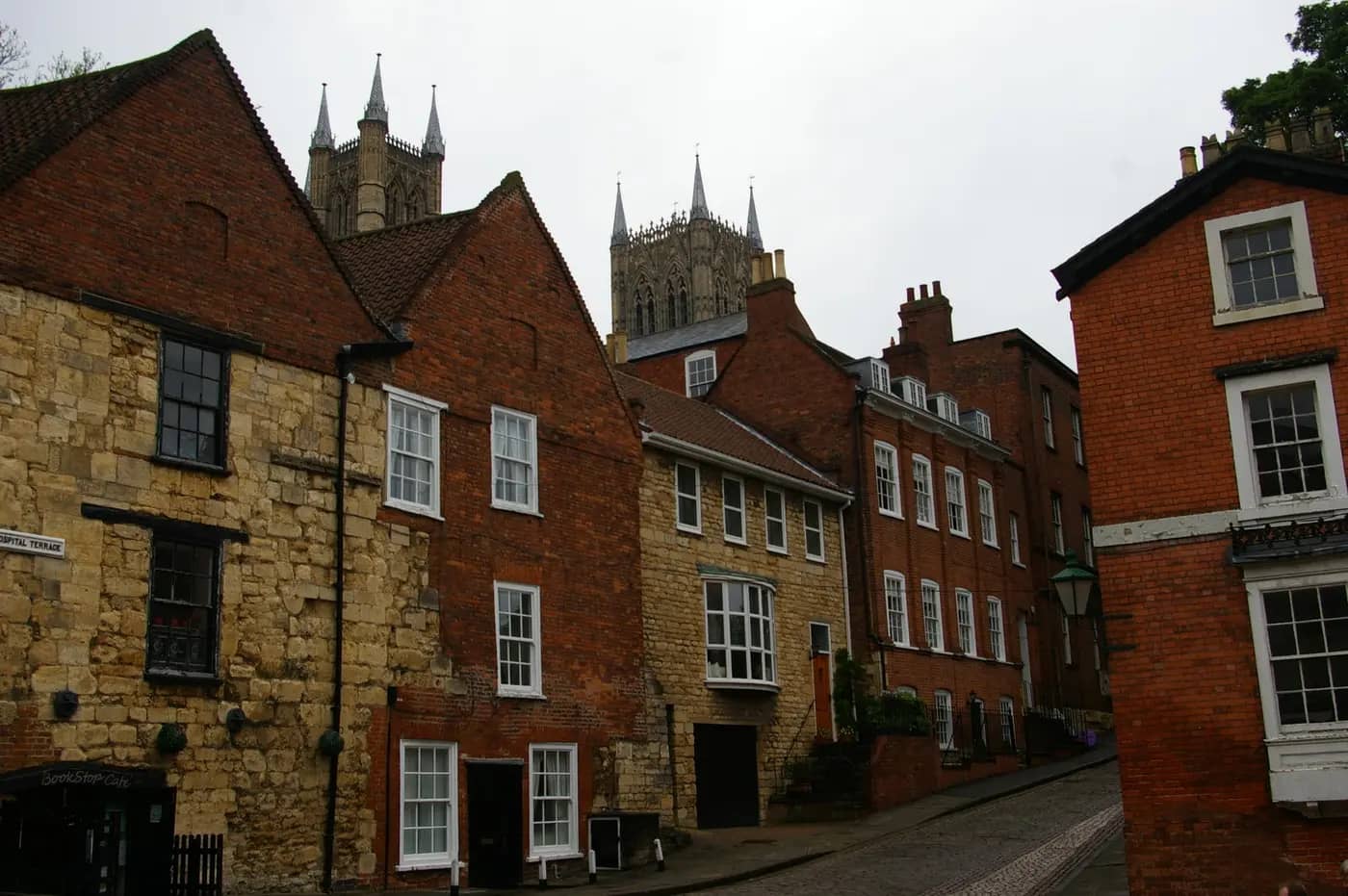
Photo: Christopher Hilton, CC BY-SA 2.0, adapted, via Wikimedia Commons
Lincoln homes, and what suits them
Uphill Lincoln, around the cathedral, the castle and Bailgate, is old stone and brick, much of it listed or in a conservation area, and the roofs are steep, small and often shaded by their neighbours. Downhill, the Victorian terraces of the West End, Monks Road and Sincil Bank have long, narrow roofs; one good slope of panels is typical, with the inverter in the loft and the battery in a cupboard or the back kitchen.
The Ermine, St Giles and Birchwood estates, and the newer housing in North Hykeham and out towards Waddington, have simpler roofs and gardens with room for a heat pump. In the city 16% of homes are purpose-built flats and 8% are heated by electricity alone; for anyone with a roof of their own, a battery charged overnight cuts the bill the most.
Beyond the city boundary the houses are bigger and the gas main thins out: about half the homes in North Kesteven, West Lindsey and East Lindsey are detached, and between 13% and 19% burn oil. That is where a heat pump, sized from a room-by-room heat loss survey rather than the old boiler, makes the biggest difference.
Planning and conservation areas
City of Lincoln Council has eleven conservation areas: Cathedral and City Centre, which takes in the cathedral, the castle and Steep Hill, plus St Peter at Gowts, Lindum and Arboretum, St Catherines, Gowts Bridge, West Parade and Brayford, Sibthorp, Carline Road, Newport and Nettleham Road, Wragby Road (The Dell) and Swanpool. Older Article 4 directions also remove permitted development rights from specific addresses in the city centre, Monks Road and Swanpool. In those places, roof panels are normally still permitted development, but panels on a front wall or a heat pump on the front of the house need consent, and an Article 4 direction can bring the roof under control too; we check at the survey and make the application if one is needed.
Around the county, West Lindsey has Article 4 directions in Market Rasen, Nettleham, Caistor, Tealby and Spridlington, North Kesteven extended Sleaford's conservation area in 2026, and East Lindsey's conservation areas include Louth, Horncastle, Woodhall Spa and Alford. Outside conservation areas and listed buildings, roof solar, batteries and air source heat pumps are permitted development on most houses across Lincolnshire.
Not sure what your house needs?
Tell us your postcode and what you are thinking about. We will come straight back to you to arrange a visit.
What we fit in Lincoln.
Solar panels
Solar and battery starting at £6,995 installed. 0% VAT until March 2027.
Battery storage
Sized to how you actually use power, not to fill a wall. 0% VAT until March 2027.
Air source heat pumps
£7,500 or £9,000 off under the Boiler Upgrade Scheme, claimed for you. 0% VAT until March 2027.
EV chargers
Fixed prices from £1,195 fitted, VAT included. Pick your charger, pay online, and we fit it.
Air conditioning
Priced per room. 0% VAT on a fixed system in your home until March 2027.
Commercial
Solar, batteries and air conditioning for Lincoln businesses, schools and farms.
Questions from Lincoln.
Who do you need permission from to connect solar in Lincoln?
National Grid Electricity Distribution runs the network in Lincoln and most of the county south and east of it, including Sleaford, Horncastle, Boston, Skegness and Mablethorpe. Gainsborough, Market Rasen and Louth are on Northern Powergrid's network instead. Either way, a typical home system is notified after the install under G98, and a bigger inverter or a large battery needs a G99 application first, which can take several weeks. We check which operator covers your postcode and deal with them for you.
I live uphill, near the cathedral. Can I still have solar panels?
Often, yes, but much of uphill Lincoln is inside the Cathedral and City Centre conservation area or its neighbours, Lindum and Arboretum and Newport and Nettleham Road, and many of the buildings are listed. Roof panels are normally still permitted development there, but parts of the city centre carry Article 4 directions that can change that, and a listed building needs listed building consent for almost any change. Rear slopes are often fine. We check your address against the council's maps at the survey and prepare the application if one is needed.
Is a heat pump worth it in a Wolds or Fens village with no gas?
That is where it makes most sense. Oil and LPG cost more per unit of heat than a heat pump does to run, and a home coming off oil or LPG gets the higher £9,000 Boiler Upgrade Scheme grant, taken off the price up front. Older farmhouses and cottages are often fine with the right radiators; we size it from a room-by-room heat loss survey, not from the old boiler.
My terrace in the West End has no drive. What can I do?
Panels on the rear slope and a battery charged on a cheap overnight tariff are usually the biggest saving for a city terrace. A home EV charger needs a parking space on your own property, so without a drive or a rear yard with access it is not an option, but more than a quarter of city households have no car anyway.
Do you cover the whole of Lincolnshire?
Yes: Lincoln and the county around it, from Gainsborough and the Wolds to Boston and the coast. Grimsby and Grantham have pages of their own. We fit anywhere in the country, so if your postcode is not listed here, put it in anyway.
Rated 4.7 on Trustpilot
Tell us about your Lincoln home.
We will come and look, talk you through what would actually work and give you a figure. No obligation.