Guides · Solar Panels · Updated · 7 min read
How solar panels work in a Yorkshire home
How solar panels work in a UK home: where the electricity goes, winter output in Yorkshire, and how an install runs from survey to switch-on.
Solar panelsSolar panel installation
Joe Sales, who runs Newpower Advanced Ltd
Director, Newpower Advanced Ltd · MCS NAP-75287 · Reviewed by Joe Sales
Want the number for your roof?
We come and look, then give you a figure. We will come straight back to you to arrange a time.
Daylight hits the panel, the panel makes direct current, and a box in the loft turns that into the 230 volt alternating current your kettle runs on. That is how solar panels work, and the rest is detail about where the electricity goes next. This is that detail, written for an ordinary British house rather than for a brochure.
If you want the kit list and the prices instead, they are on the solar panels page. What follows is the physics, the shape of the year, and what actually happens while we are at your house.
How do solar panels work in a UK home?
Each panel is a sheet of silicon cells under toughened glass. Light knocks electrons loose inside a cell, and the way the cell is built pushes them all the same way. That flow is direct current.
Two things follow from that, and they are the two things people get wrong about how solar panels work for a home.
The first is that light does the work, not warmth. Panels lose a little output as they heat up, so a crisp March afternoon can beat a muggy July one.
The second is that cloud reduces output rather than stopping it. Diffuse light still reaches the cells. A flat grey South Yorkshire day still puts something in, just not much.
What is actually on the roof and in the loft?
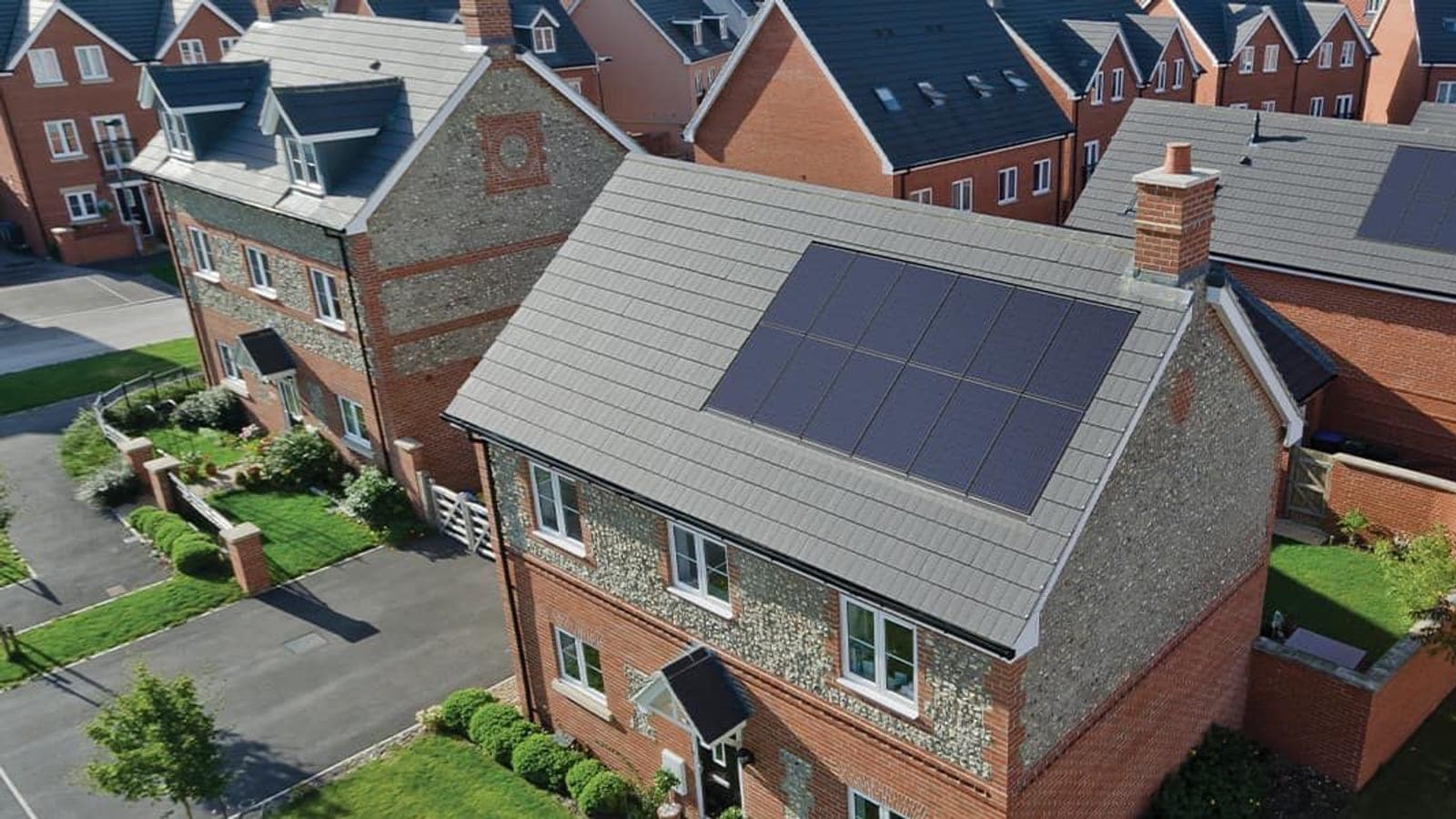
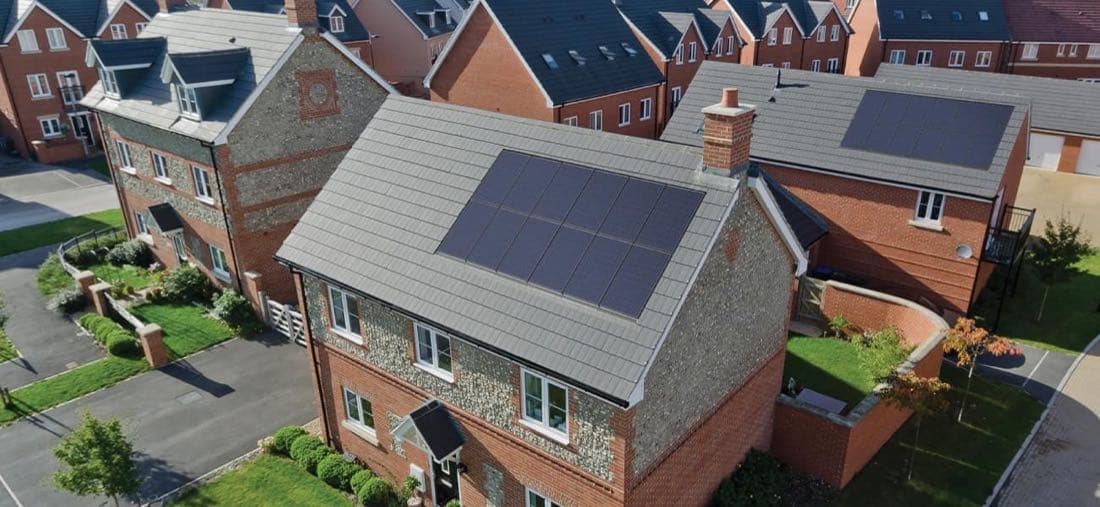
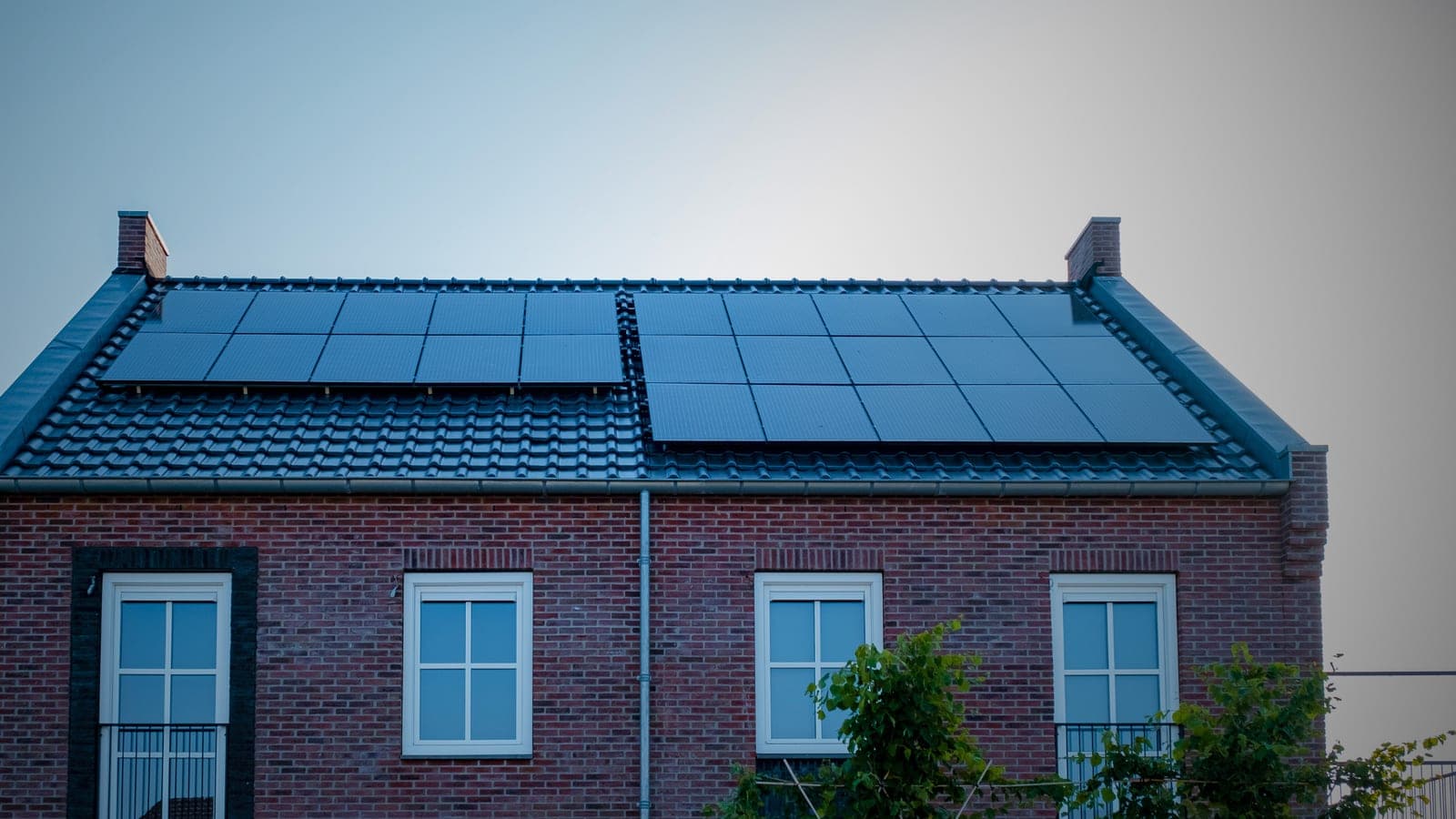
Panels and mounting. Aluminium rails bolt to hooks fixed through to the rafters. The hooks sit under the tiles and the tiles go back over them. Nothing is glued or screwed to the tile itself.
The inverter. Usually in the loft or the garage. It converts DC to AC, and it is the brain of the system: monitoring, safe shutdown, and battery control on a hybrid unit.
Optimisers, sometimes. Small units behind individual panels so one shaded panel cannot drag its whole string down. We fit them where the survey shows shading and not otherwise, because they are extra electronics at roof level.
A battery, if you want one. It parks the afternoon surplus for the evening. There is more on that on the battery storage page.
Isolators, a dedicated circuit and your smart meter. The isolators let the system be switched off safely for work. Your supplier's smart meter records import and export separately, and you need that to be paid for what you send out.
Where does the electricity go while you are out?
It goes in a fixed order, automatically, with no button to press.
- Your house. Whatever is running at that moment: fridge, freezer, router, immersion, an EV on charge.
- Your battery, if there is one, takes the surplus.
- The grid. Everything still spare is exported.
Under the Smart Export Guarantee, suppliers with 150,000 or more domestic customers have to offer you a tariff for that exported electricity. Ofgem sets the obligation, not the price. Each supplier picks its own rate and moves it, so compare the export tariffs the week your MCS certificate lands. Our smart energy tariffs page tracks what is on offer.
After dark the order reverses: battery first, then grid. Panels do nothing at night, and any installer who suggests otherwise should not be on your roof.
What does a 4.8 kWp system make in a year?
Take an ordinary job. A three-bed semi in Rotherham, a clear south-west facing rear pitch, ten LONGi Hi-MO X10 panels and a Hanchu 5 kW hybrid inverter. That comes to 4.8 kWp.
At the 950 to 1,000 kWh per kWp we see across South Yorkshire, that array makes between 4,500 and 4,800 kWh a year. Around three quarters of it arrives between April and September.
What that is worth depends on your own habits, so do the sum yourself. Take the units you use in the house while it is light, multiply by the unit rate on your last bill, then add the export payments on the rest. A household that is in during the day gets far more from the same roof than one that leaves at seven and gets back at six. The second household is the one that should be looking at a battery.
With a 5.12 kWh battery, that job starts from £9,000 fitted. With a Powerwall 3 it starts from £12,500. A smaller system with a compact battery starts from £6,995.
What is solar panel output in winter in the UK?
Lower, and worth being straight about. December here produces a small fraction of what June does, because the sun is low, the days are short and the cloud sits over the Pennines for weeks at a time.
That is why a battery does less for you in January: there is not much surplus to store. It is also why the summer export rate matters more than people assume while they are comparing quotes.
Snow slides off a pitched array within a day or so once any light gets through. Frost does nothing at all. Panels are tested for both.
Which way does the roof need to face?
South is best. In practice most roofs are fine.
- South, south-east, south-west. Full output, give or take a few percent.
- East and west. Less on each side, but splitting the array across both spreads generation over the morning and the evening, which is when most families are in. Plenty of Sheffield terraces run east to west and they work.
- North only. We will not quote it. The numbers do not stack up, and I would rather say so on the phone.
Pitch matters far less than orientation. Anything from a shallow dormer to a steep Victorian slate is workable, and a flat roof takes a tilted frame.
What happens during the install?
An engineer surveys first: measures the roof, gets in the loft to look at the rafters, checks your consumer unit and meter position, and photographs anything that will shade the array. Then you get a layout drawing, a generation estimate for your roof and a quote in writing.
Before anything goes up, the connection has to be agreed with the network operator that owns the wires in your street. Small systems are notified after the event under G98. Most ten-panel systems with a battery need G99 approval first, so we submit it the day you accept.
Scaffold goes up the day before. On install day the roofers fit hooks, rails and panels while the electrician runs the DC cabling, mounts the inverter and isolators and connects into the consumer unit. Most straightforward roofs are a day. Awkward access, two pitches or a battery out in a separate garage will stretch it.
Then commissioning, the app on your phone, and the paperwork: MCS certificate, electrical installation certificate and the network confirmation. You need the MCS certificate before any supplier will pay you for export.
Planning permission is not normally needed. Roof panels on a house are permitted development in England provided they do not stand more than 200 mm proud of the roof surface and the house is not listed. Conservation areas add rules about walls and roof slopes facing a highway.
What I would check before you book anything
Ask any installer what the panels are, what the inverter is, and who carries the workmanship warranty. If they will not name the kit on the quote, you have your answer.
Ask whether the price includes scaffold. That one catches people out more than any other line on a quote.
Then look at your own electricity bill and work out how much of it you use between nine and four. That number decides whether you want panels, or panels and a battery, and no salesman can tell you it.
If you know how it works, the next question is what yours would cost. Solar panel prices in Yorkshire has the ladder, and which solar panels are best covers the kit itself.
When you are ready, Get a quote with your postcode and we will survey the roof for nothing. Or ring 01709 278248 and talk it through first.
Want the number for your roof?
We come and look, then give you a figure. We will come straight back to you to arrange a time.
About Joe Sales
Joe Sales runs Newpower Advanced Ltd from Rotherham and reads and signs off every guide on this site. More about Joe Sales · Meet the team · More solar panels guides
Our guides are written by the people who do the installs and checked against our own job records. How we write