
Aiko solar panels
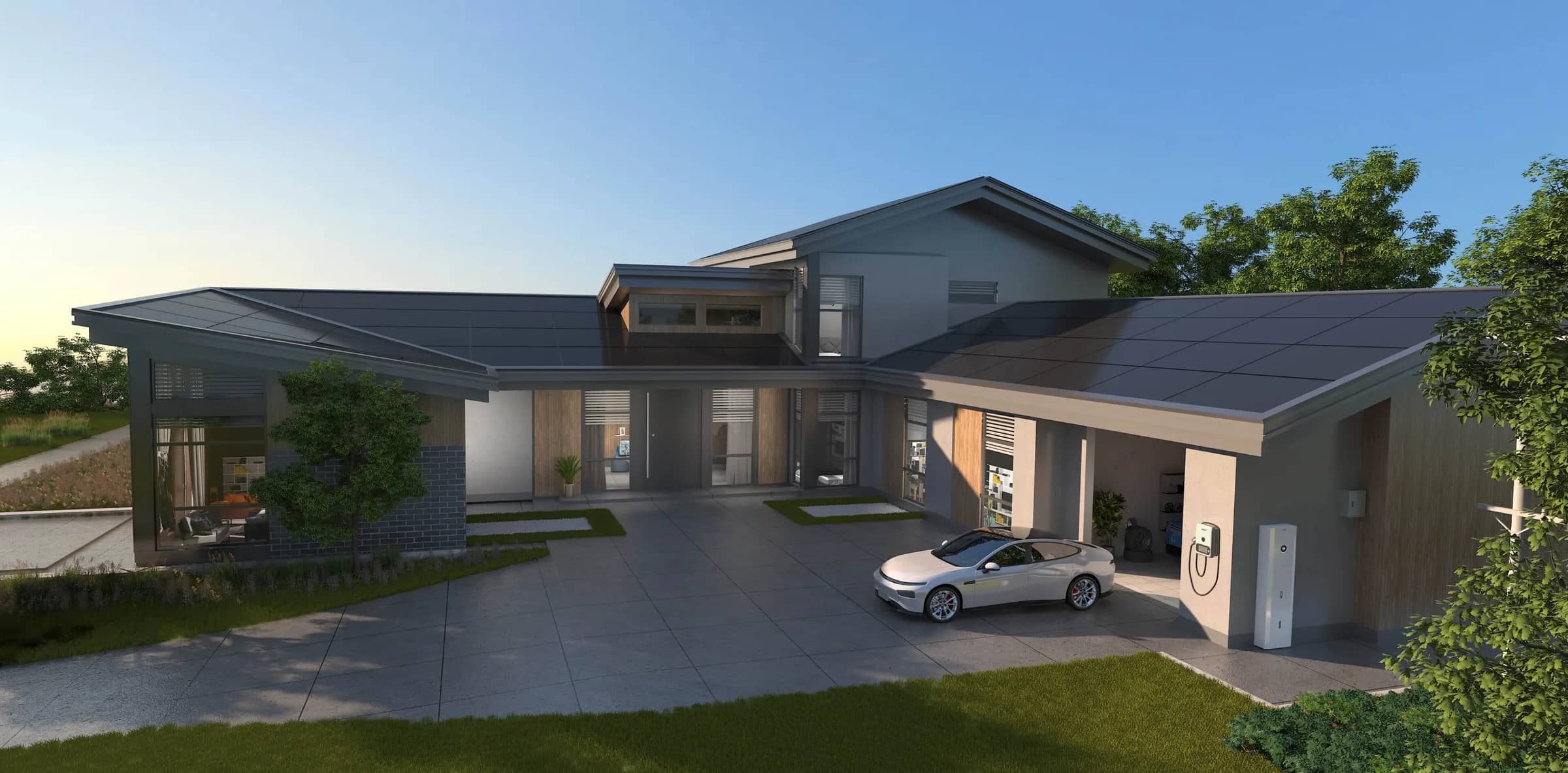
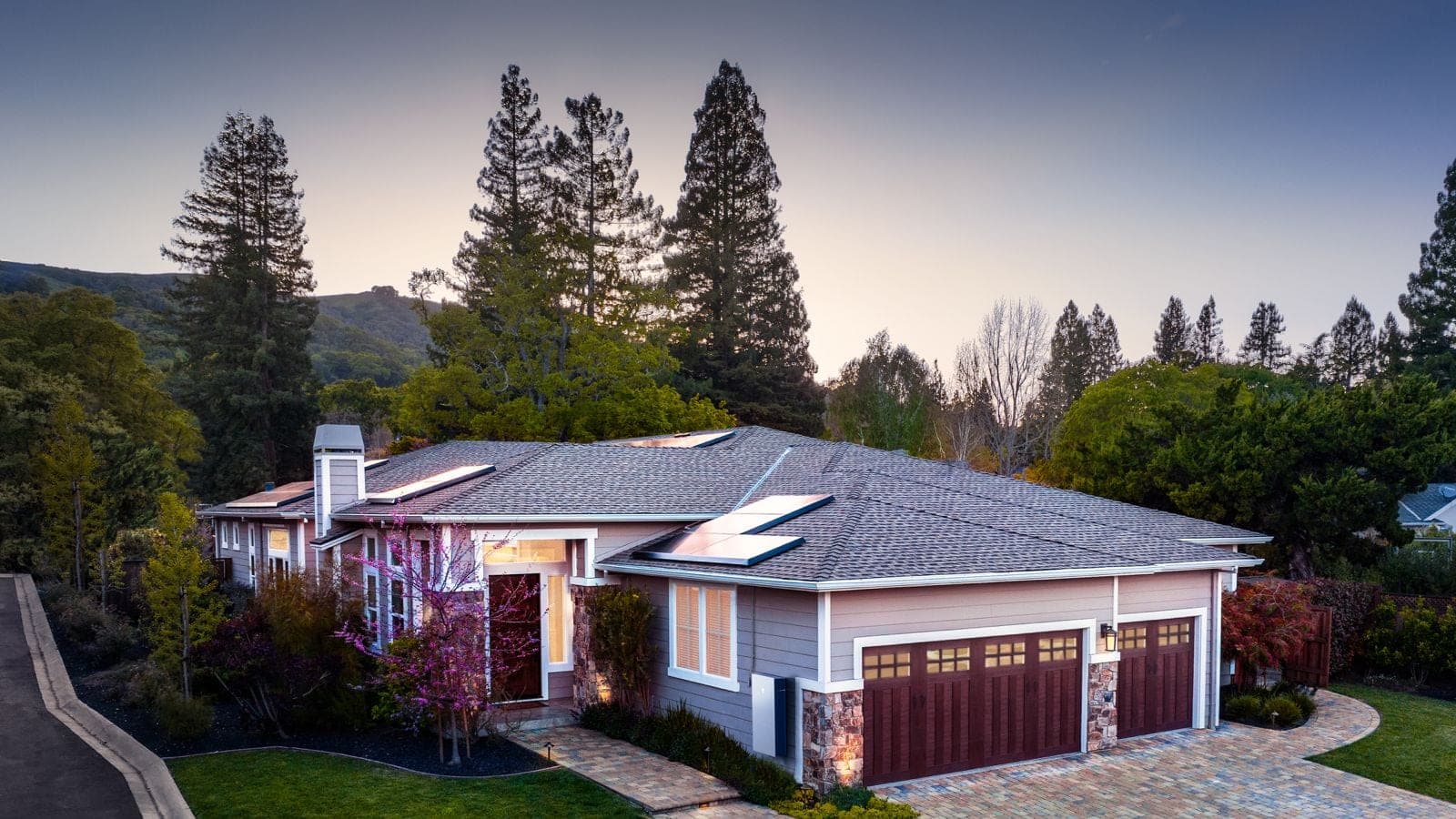
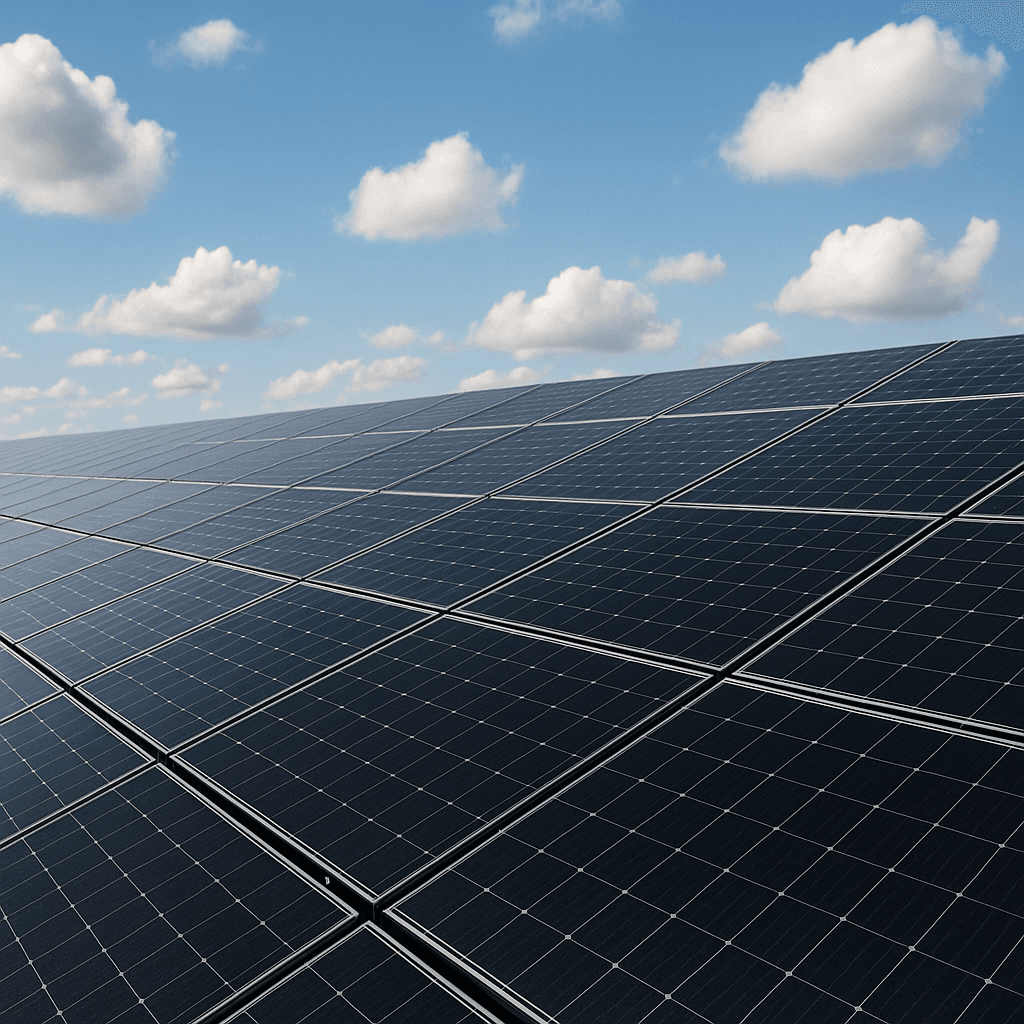
Back-contact cells put all the wiring behind the panel, so there are no silver lines on your roof and no dead strip where a shadow lands.
4.7 on Trustpilot

 No obligation
Why people ask for Aiko by name
Most panels have thin silver busbars running across the front, because that is where the current is collected. Aiko's ABC cells move that collection to the back. The visible result is a panel that is properly black rather than black with a grid on it, which on any roof you can see from the pavement is the difference between a house that looks finished and one that looks like it has had something bolted on.
The part that matters more is what happens in shade. On a conventional panel, a chimney shadow across one cell can drag down a whole string. Back-contact cells with finer sub-strings handle partial shading better, and on the tight, chimney-heavy roofs we work on around Rotherham and Sheffield, that is not a theoretical advantage.
They cost more per panel than the mainstream. On a clear, simple roof that premium is hard to justify. On a roof with a chimney, a dormer or a neighbour's conifer, it usually pays for itself.
- ABC back-contact cells, so there is no front-side wiring to see
- Genuinely all-black, not black with silver gridlines
- Better partial-shading behaviour than conventional cells
- MCS listed and zero-rated for VAT until 31 March 2027
We are a Aiko installer
The full Aiko range
We fit the whole Aiko range, and we will use whichever module suits the roof, the budget and the space available. The three below are the ones that come up most often, not the only ones we can get.
Roughly how the range maps onto real houses:
Neostar 2S
Roofs that are on show, where the budget still has to be sensible.
- Cell type
- ABC back contact
- Appearance
- Full black, no visible busbars
- Warranty
- 25 years product and performance
- Best for
- Roofs people can see
Neostar 3S
Higher output per panel where roof space is the constraint.
- Cell type
- ABC back contact
- Output
- Higher per panel than the 2S
- Warranty
- 25 years product and performance
- Best for
- Small roofs that need every watt
Neostar 3S+
Where shade or a tight roof makes the extra efficiency worth paying for.
- Cell type
- ABC back contact
- Output
- Highest in the range
- Warranty
- 25 years product and performance
- Best for
- Shaded or awkward roofs
How Aiko compares
| Aiko | LONGi Hi-MO X10 | A standard mono panel | |
|---|---|---|---|
| Cell technology | ABC back contact | HPBC back contact | PERC or TOPCon |
| Front-side wiring | None visible | None visible | Silver busbars |
| Partial shade | Strongest | Strong | Weakest |
| Price per panel | Highest | High | Lowest |
| Warranty | 25 years | 25 years | Usually 12 to 25 years |
| Best for | Roofs with shade, or roofs on show | Most roofs | Clear roofs nobody sees |
The honest verdict
Why we fit a lot of them
- The best-looking panel we fit, by a distance, on a roof anybody can see
- Genuinely better in partial shade, which is common on Victorian and interwar streets
- 25 year product and performance warranty, not 12 on the product and 25 on the output
- Higher output per panel, so a small roof gets more system
What to weigh up
- More expensive per panel than a mainstream mono
- On a roof that gets no shade and that nobody can see from the ground, you are paying for something you will never notice
- Back-contact supply is newer than conventional cells, so the twenty-year field data does not exist yet
- A better panel will not rescue a bad design; orientation and shading still decide the yield
Questions we get asked about Aiko
Why are Aiko panels all black?
Because the cells are back-contact, so the wiring that normally crosses the front of the panel is on the back instead. There is nothing sprayed or laminated on to hide it; there is simply nothing on the front to hide.
Are they better in shade?
Yes, meaningfully. The cell layout means a shadow across part of a panel takes less of the output with it. On a roof with a chimney or a dormer that is worth real money over a year.
Are they worth the extra over LONGi?
It depends on two things about your roof, and neither of them is which way it faces. The first is shade: a chimney, a dormer, a neighbour's tree. The Aiko handles that better, and on a shaded roof it usually pays for itself. The second is whether anybody can see the roof. If it is overlooked or faces a road, the fact there are no silver lines on it is worth something to most people. Get a roof with no shade that nobody can see, and a LONGi does the same job for less. We will tell you which yours is at the survey rather than quoting the dearer panel by default.
Do they qualify for 0% VAT?
Yes. Domestic solar is zero-rated for VAT until 31 March 2027, after which it goes to 5%. That applies to the whole installation, not just the panels.
What is the warranty?
25 years on both the product and the performance. Read that distinction on any quote you get: plenty of panels carry 25 years on output but only 12 on the panel itself.
Get a price for a Aiko system.
We come and look at the house, tell you whether this is the right unit for it, and put the price in writing.