%20copy.png)
Heat Pump Noise Levels

Updated: Jan 9
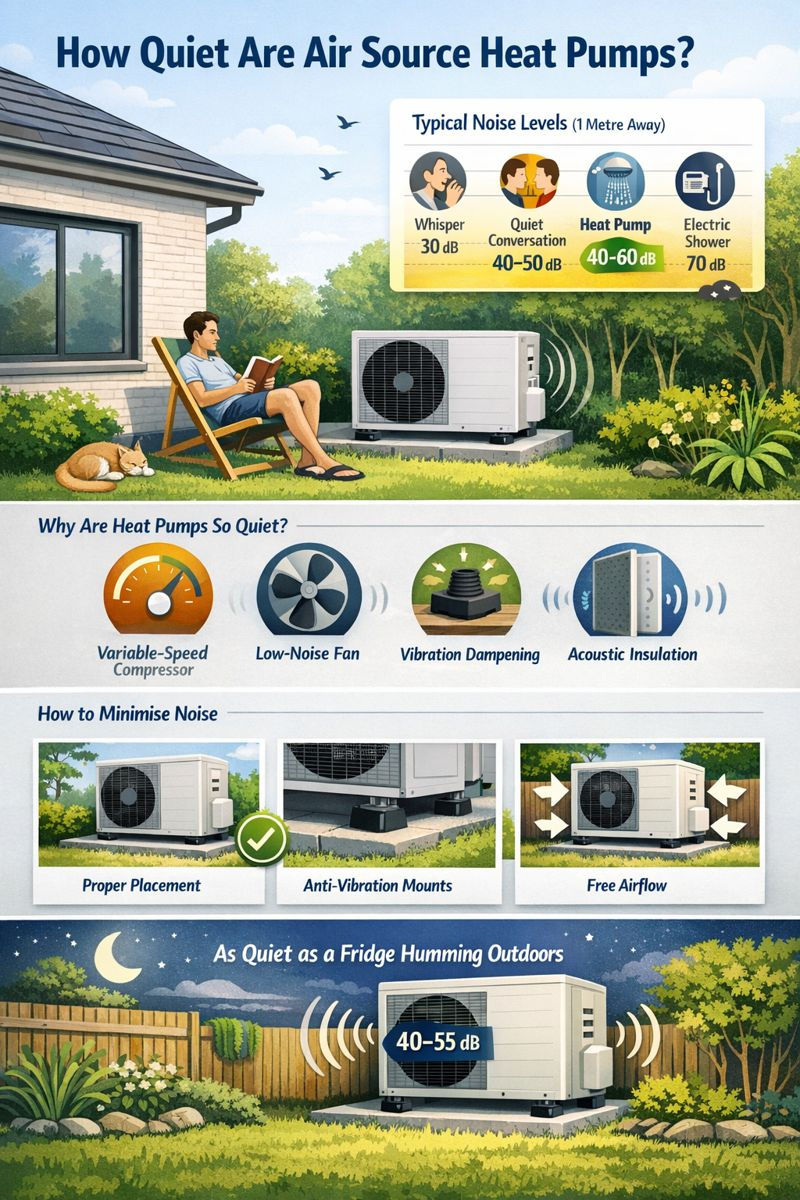
Modern air source heat pumps (ASHPs) are designed to run quietly and efficiently, but like any outdoor mechanical equipment, they do produce some sound. Understanding heat pump noise levels — and how UK regulations control them — is important for correct installation, neighbour considerations, and long-term satisfaction.
This UK-focused guide explains how loud heat pumps actually are, how noise is measured, how placement affects sound levels, and how to ensure compliance with UK planning rules.
Typical Noise Levels of Modern Air Source Heat Pumps
Most air source heat pumps operate within:
📌 40–60 dB, measured 1 metre from the outdoor unit.
This range is similar to other everyday sounds:
Sound Source | Approx. dB Level |
Whisper | 30 dB |
Quiet conversation | 40–50 dB |
Modern heat pump (avg.) | 40–55 dB |
Electric shower | 70 dB |
Vacuum cleaner | 70–80 dB |
Even at the higher end of their operating range, heat pumps remain on the quieter side of household noise. Many premium models operate at 35–45 dB, making them barely noticeable from a short distance away.
Why Heat Pumps Are Quiet in Real-World UK Use
Heat pump technology has advanced significantly in recent years. Features that contribute to quieter operation include:
Variable-speed (inverter) compressors
Older systems switched on and off at full power, causing noticeable noise. Modern ASHPs modulate smoothly and spend most of their time at low output levels.
Aerodynamically optimised fans
Fan blade shape and motor control reduce turbulence, the main source of fan noise.
Vibration-reduction engineering
Rubber isolation mounts, smoother motor balancing, and better chassis design help prevent humming or rattling.
Sound-insulated casings
Acoustic panels and weatherproof shells keep internal noise contained.
Real-world experience:
Most homeowners describe the noise as similar to a quiet fridge humming, especially once the unit is a few metres away or partially shielded by landscaping.
What Causes Noise from a Heat Pump?
While heat pumps are quiet, slight operational sounds are normal. The main sources include:
1. The Fan
Draws air across the heat exchanger. Usually the quietest component, especially at lower speeds.
2. The Compressor
Generates a soft hum when running. Modern rotary and scroll compressors are highly refined and quiet.
3. Airflow Obstruction
If the unit is placed too close to walls, fences, or corners, airflow becomes turbulent, increasing noise.
4. Defrost Cycles (winter)
In the UK’s damp, cold climate, heat pumps periodically defrost to maintain efficiency. During this stage:
Fan speed may increase briefly
A soft whoosh or gurgle may be heard
Noise remains temporary and within expected levels.
How Noise Levels Change Throughout the Day
Heat pumps do not remain at a constant volume. Their sound output reflects the heating demand:
Early morning & evening
When the system replenishes heat or hot water, it may run slightly louder.
Daytime
Often extremely quiet, low output means the compressor and fan operate slowly.
Night-time
Many units reduce noise automatically:
“Quiet mode” limits fan speed
Some models shift running cycles to earlier hours
UK planning rules incentivise night-time noise reduction
This ensures compliance even in densely populated areas.
UK Planning Rules and Noise Regulations
Heat pump installations in England and Wales generally fall under Permitted Development, meaning no planning permission is needed if they meet the following standards.
MCS 020 Noise Assessment
Every MCS-certified installer must conduct an acoustic assessment ensuring:
✔Noise does not exceed 42 dB at the nearest neighbour’s window
The outdoor unit is at least 1 metre from property boundaries
Sound reflections and amplifying surfaces are minimised
If these criteria are met, the installation meets national regulations.
When planning permission may be required
Listed buildings
Conservation areas, national parks, Areas of Outstanding Natural Beauty
Installing more than one outdoor unit
Certain flats or commercial setups
Scotland and Northern Ireland follow similar but slightly adapted rules.
Best Locations to Minimise Noise
Where the heat pump is placed has a big impact on perceived loudness.
Recommended placement:
Ground-level installation in the garden
On a solid concrete pad with anti-vibration feet
Away from bedroom windows
Avoiding narrow passages or corners that cause echo
Ensuring free airflow on all sides
Positioned so it is not directly facing a neighbour’s home
Good placement alone can reduce perceived noise by up to 50%.
How Installers Reduce Noise in UK Installations
Professional, MCS-certified installers apply a variety of techniques:
Anti-vibration mounts
Stop mechanical vibrations travelling into walls or the ground.
Flexible pipework
Prevents resonance noises where pipes enter the home.
Sound-optimised placement
Installers choose positions to minimise reflective surfaces and neighbour impact.
Correct airflow clearances
Ensures efficient and quiet fan operation.
Night-mode options
Many systems include programmable low-noise settings, essential for urban or suburban environments.
Do Heat Pumps Disturb Neighbours?
Noise complaints about modern heat pumps are rare when systems are installed correctly.
Why?
They run quietly for the majority of the time
Planning rules safeguard neighbouring properties
Units are often placed behind houses, away from streets and boundaries
They are quieter than alternatives
Oil boilers, generators, and older air-con units are all significantly noisier.
Studies show that with proper siting, a heat pump becomes almost inaudible at a few metres away, particularly in outdoor British ambient noise (wind, birds, traffic, etc.).
Can You Make a Heat Pump Even Quieter?
Yes, several enhancements can reduce noise further:
Acoustic fencing or barriers
Useful if the pump must be near a boundary. Must allow adequate airflow to avoid overheating.
Rubber isolation feet
Prevent vibration transfer into decking, patios, or brackets.
Choose an ultra-low-noise model
Some advanced systems achieve 35–40 dB — quieter than a modern fridge.
Regular cleaning
Removing leaves, dirt, or debris improves airflow and reduces turbulence noise.
These steps are optional but beneficial in sensitive locations.
Air source heat pumps are one of the quietest heating technologies available for UK homes. With:
Typical sound levels of 40–60 dB (often less in practice)
Strict UK planning rules that cap noise at neighbours’ properties
Modern low-noise engineering and smart controls
Professional installation ensuring optimal positioning
A heat pump should operate quietly and blend seamlessly into everyday life. Most homeowners quickly forget it’s even running. If you want to swich to an air source heat pump then contact our team at Newpower today.


